Top 10 LinkedIn Content Ideas for Entrepreneurs

LinkedIn is a powerful platform for entrepreneurs to grow their business, build authority, and connect with professionals. To maximize its potential, focus on creating content that informs, engages, and builds trust. Here are 10 LinkedIn content ideas you can start using today:
- Share Business Lessons: Post stories about challenges, failures, and successes to connect with your audience on a personal level.
- Use AI Tools: Leverage tools like Typoro to create tailored, consistent content in your voice.
- Analyze Industry Trends: Break down trends and their impact, offering your perspective to spark discussions.
- Create Tutorials: Post step-by-step guides to simplify complex processes and provide actionable value.
- Highlight Customer Stories: Share testimonials and success stories to showcase your product’s impact.
- Run Polls and Ask Questions: Use interactive posts to engage your audience and gather insights.
- Celebrate Milestones: Share achievements and the journey behind them to inspire and connect.
- Show Behind-the-Scenes: Humanize your brand with workplace moments, team highlights, or process videos.
- Offer Free Resources: Share templates, guides, or reports to provide immediate value and generate leads.
- Promote Networking: Host events, collaborate with others, and engage in LinkedIn groups to build connections.
Key Tip: Consistency and engagement are critical. Start with 2-3 ideas that align with your goals, and experiment to see what resonates with your audience. Use tools like Typoro to simplify planning and tracking performance.
8 Best LinkedIn Post Ideas For MASSIVE Growth
1. Share Business Insights and Lessons Learned
Telling real stories about your business journey can make a big impact on LinkedIn. When you open up about challenges, failures, and turning points, it not only makes your brand feel more relatable but also helps build trust with your audience.
Consider sharing personal experiences – like grappling with cash flow issues, making tough decisions, or hiring someone who changed the course of your business. These stories can provide valuable lessons for others while showing your growth and expertise.
Here’s how you can effectively share your insights:
- Failure stories with lessons: Talk about a mistake you made, what it cost you, and the lessons you took away. For instance, "We lost $50,000 and spent six months on a project that failed, but it taught us the importance of validating ideas with customers first."
- Moments of growth: Share a pivotal moment in your business journey, backed by numbers or metrics, that highlights a major shift in your strategy.
- Industry insights from experience: Use real-world data or observations to discuss trends, customer behaviors, or challenges like pricing pressures.
Posts that include personal stories and lessons often get more engagement because they connect with people on an emotional level. Authentic content that feels real and offers practical value encourages comments, shares, and interactions.
Focus on stories that highlight your ability to solve problems, adapt to challenges, and think strategically. These are the traits that potential partners, clients, and investors look for in leaders.
2. Use AI-Powered Content Creation with Tools like Typoro
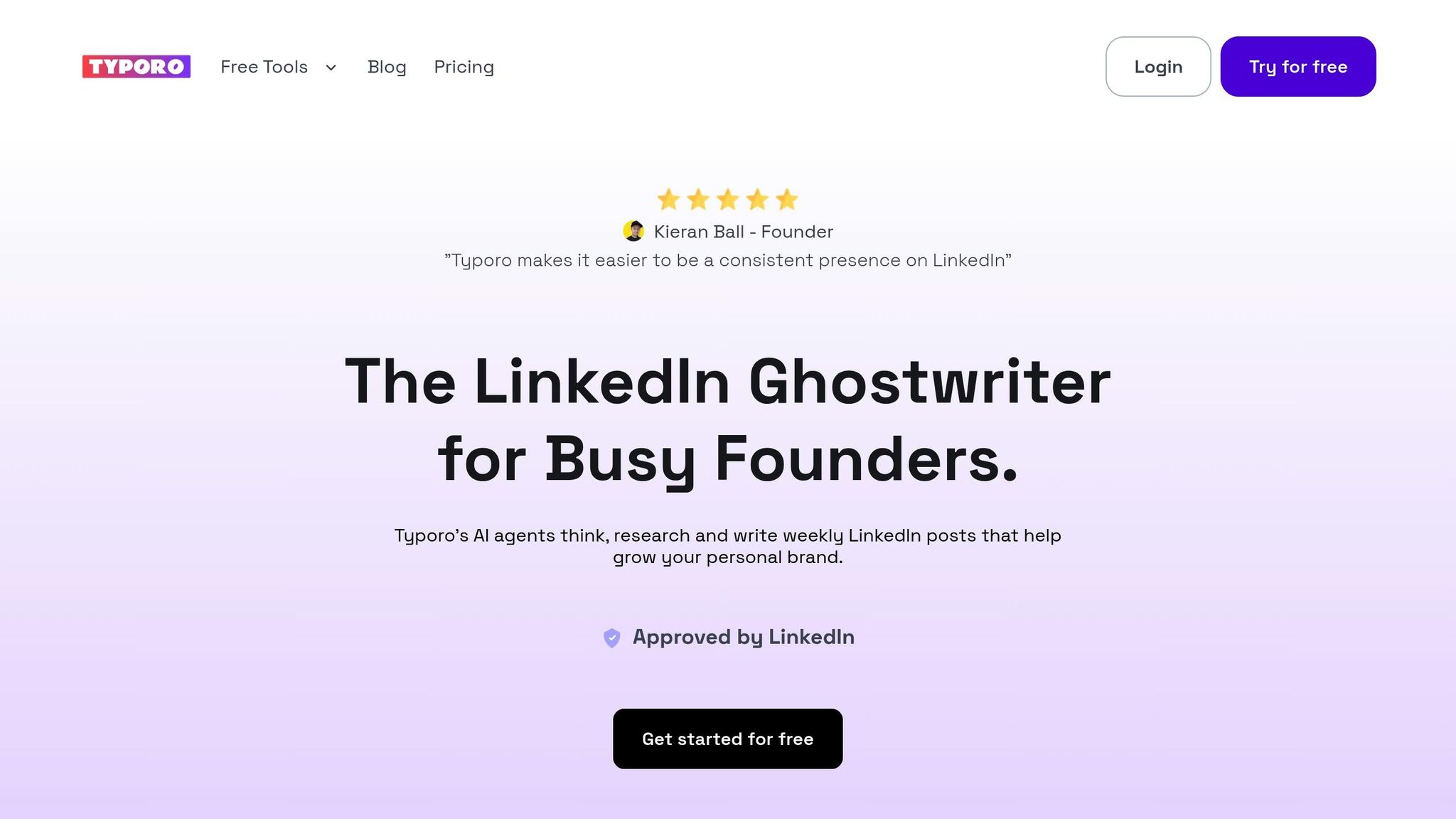
Creating consistent, engaging LinkedIn content can feel like a daunting task, especially for busy entrepreneurs. That’s where AI-powered tools step in to make life easier.
Typoro is specifically designed to help founders stay active on LinkedIn without the hassle. What sets it apart? It adapts to your unique voice and tone, ensuring that the content it generates feels personal and not like a cookie-cutter corporate post.
The platform’s AI post writer turns basic ideas into polished, industry-specific content. For instance, if you start with something like "quarterly growth challenges", Typoro can give you several directions to explore – ranging from analytical posts packed with data to reflective, story-driven updates.
Another standout feature is its audience-specific content tool. By analyzing your LinkedIn network, Typoro creates posts that align with your audience’s interests and engagement habits. This means your content isn’t just relevant – it’s tailored to spark conversations within your network.
Typoro also simplifies the posting process with its scheduling feature. You can batch-create your posts and have them automatically published at the best times, ensuring consistency even when you’re swamped or on the go.
To top it off, Typoro includes performance tracking. You’ll get insights into which posts resonate most, helping you fine-tune your strategy and focus on content that truly connects. Plus, it allows you to repurpose successful posts and collaborate with your team to maintain a cohesive yet personalized brand presence.
With tools like Typoro, staying active and relevant on LinkedIn becomes a whole lot easier.
3. Provide Expert Analysis on Industry Trends
Your entrepreneurial background gives you a unique lens to examine emerging trends, positioning you as a trusted voice in your field while encouraging meaningful discussions.
But don’t just report trends – interpret them. Use your insights to demonstrate strategic thinking and offer value to your audience.
Focus on trends that resonate with your industry and audience. For example, if you’re in SaaS, you could break down the growing adoption of AI in business tools. If you’re in e-commerce, dive into how consumer behavior is evolving or explore new marketing channels that are reshaping the landscape.
Consider the ripple effects these trends have on businesses of different sizes. For instance, remote work tools might empower small businesses to cut costs, while larger enterprises may find them challenging to scale. Similarly, traditional office-based service providers may need to rethink their offerings to stay relevant.
Leverage your own experiences to make your analysis more relatable. For example, you could share how adapting to data privacy regulations impacted your marketing strategies or how supply chain disruptions pushed you to expand your vendor network. Real-world examples like these not only strengthen your analysis but also make it more engaging.
When sharing trends, prioritize clarity and context over sheer volume of data. Include one or two striking numbers to support your points, but spend most of your time explaining what those figures mean for your audience’s businesses. This approach keeps your content digestible and impactful.
Finally, think about creating regular trend analysis posts – like a monthly industry update or quarterly predictions. Consistency builds trust, keeps your audience engaged, and positions you as a go-to source for industry insights.
4. Create Step-by-Step Guides and Tutorials
Educational content shines when it simplifies complex processes into clear, actionable steps. By sharing your expertise in this way, you not only inform but also build trust with your audience.
To create a strong tutorial, address common questions or challenges you’ve faced in your journey. Turning your experiences into teachable moments makes your content relatable and useful. Using engaging formats, like visuals, can help break down information into manageable pieces that are easy to follow.
One effective approach is using multi-image carousel posts on LinkedIn. These posts perform well because each slide focuses on a single step, keeping the content straightforward and visually appealing. For instance, a carousel guide titled "5 Dos and Don’ts When Pitching to Investors" could dedicate each slide to one key takeaway, making the advice practical and easy to digest.
Dr. Daniel Amen has mastered this strategy on LinkedIn. His posts offer actionable tips on topics like diet, exercise, and lifestyle changes to improve brain function. These posts consistently rank among the top-performing healthcare content on the platform. His success demonstrates how breaking expertise into simple, practical steps can resonate deeply with professional audiences.
Focus on delivering step-by-step tips that are backed by useful tools and measurable outcomes. Not only will this serve your audience’s needs, but it also creates multiple opportunities to repurpose your content for broader reach.
5. Highlight Customer Success Stories and Testimonials
Pair expert opinions with real-life examples to show how your products or services make a difference. Sharing customer success stories not only demonstrates the value of what you offer but also helps potential clients connect with your brand on a personal level. Testimonials are powerful tools – they build trust, encourage engagement on platforms like LinkedIn, and make your audience feel more confident about choosing you.
sbb-itb-1b818d9
6. Engage Your Audience with Polls and Questions
Using polls and questions on LinkedIn is a smart way to connect with your audience and get conversations rolling. They not only invite interaction but also give you a peek into what your audience is thinking – valuable feedback that can guide your business decisions.
Here’s a compelling fact: polls can generate over 200% more reach compared to regular posts, and engaging comments can amplify your reach up to 15 times. These numbers show the power of interactive content in boosting visibility. To make the most of it, focus on asking sharp, thought-provoking questions.
When crafting your questions, keep them relevant to your industry and current trends. Instead of broad or generic prompts, go for specifics. For example, ask something like, "What’s the biggest challenge you’ve faced when scaling your team?" or "Which emerging technology do you think will reshape small businesses in the next five years?" Questions like these encourage detailed responses and meaningful engagement.
For polls, design options that inspire strong opinions and spark discussions. Take a simple question like, "Do you prefer remote or office work?" and reframe it to something more engaging, like, "For startup success, what matters more: a perfect product-market fit or exceptional team chemistry?" This type of framing nudges your audience to think critically and share their thoughts in the comments.
Don’t stop at just posting – be active in the conversation. Respond to comments, ask follow-up questions, and encourage your audience to tag others or share their experiences. Including a clear call to action, like inviting them to connect or share similar challenges, helps build a sense of community while keeping the discussion alive. Choose topics that resonate deeply, and you’ll see your audience actively participating and sharing.
7. Announce Milestones and Achievements
Sharing milestones isn’t just about celebrating wins – it’s a way to build trust, spark interest, and inspire your network. Plus, it gives your audience a peek into the story behind your entrepreneurial journey.
The key is balance: share your achievements without coming across as boastful. Think of it as inviting others along for the ride, not just showing off the destination.
For example, hitting a major revenue target is worth sharing, but don’t stop at the numbers. Talk about the road that got you there – challenges you faced, decisions that made a difference, or the people who helped along the way. This turns a simple announcement into a story others can connect with and learn from.
Team growth is another great milestone to highlight. Whether you’ve hired your first employee or expanded a department, it’s a sign of progress. Share what this growth means for your company’s future and what kind of talent you’re looking for – it might even attract the right candidates to your team.
Other accomplishments, like launching a product, forming partnerships, or earning industry recognition, also deserve the spotlight. When you share these, go beyond the surface. Explain why they matter and how they fit into your bigger picture.
The trick is to keep things fresh. Don’t flood your network with constant updates – space them out and make sure each post offers something meaningful. Whether it’s inspiration, a lesson learned, or insight into your industry, tie each milestone back to your overall content strategy on LinkedIn.
8. Share Behind-the-Scenes Content
Sharing behind-the-scenes content on LinkedIn is a great way to make your brand feel more approachable and real. By showcasing the people and processes behind your business, you can create a stronger connection with your audience. Instead of relying solely on polished corporate posts, this type of content brings a human touch that resonates with viewers.
Consider giving your audience a peek into your daily operations. Whether it’s a brainstorming session in the conference room, the buzz of your workplace, or the steps involved in creating your product, these glimpses can make your brand more relatable. And when it comes to bringing these moments to life, video is an excellent tool.
Videos on LinkedIn perform exceptionally well. They’re 20 times more likely to be shared and generate five times the engagement compared to other types of posts. Live videos take it even further, driving 24 times more engagement than standard posts.
Louise Brogan, a LinkedIn marketing consultant, emphasizes that “effective behind-the-scenes videos humanize a brand”.
To make the most of this, keep your behind-the-scenes videos short – ideally under 30 seconds. Grab attention in the first 10 seconds and always include captions to ensure accessibility. These small adjustments can significantly enhance the impact of your content.
Your company culture is a treasure trove of content ideas. Share moments like team meetings, celebrations, or community events. Highlight employees as they collaborate on projects or celebrate their achievements. Even a simple office tour or a look at your manufacturing process can be engaging, showcasing the hard work and dedication of your team.
There’s a bonus to this approach: when employees feel connected to their organization, they’re 60% more likely to engage with each other’s posts and 14 times more likely to share company content. A great example comes from Google, which in August 2025 shared vibrant moments from their workspace and community activities on LinkedIn. This not only boosted their brand visibility but also attracted potential employees.
9. Offer Free Resources and Lead Magnets
Sharing free resources on LinkedIn is a powerful way to build credibility and attract potential leads. By offering valuable content, you not only position yourself as an industry expert but also tap into LinkedIn’s vast network of over 1 billion users, which includes 65 million business decision-makers and 10 million C-level executives. It’s the perfect platform to connect with the right audience.
Here’s why this works: LinkedIn boasts a 2.74% visitor-to-lead conversion rate, which outshines other platforms. This makes it an ideal space to share resources that can turn casual connections into meaningful business relationships.
What makes a great lead magnet? It should provide immediate value and be easy to use. Think templates, frameworks, checklists, or industry reports – something your audience can download and apply right away without needing extra tools or time. For example, a project management template for tech startups or a guide like "The Complete Guide to Scaling Your SaaS Business" could resonate deeply with your target audience. Webinars and mini-courses are also great options, especially if they address pressing challenges in your industry.
Don’t underestimate the power of visuals. When promoting your lead magnet on LinkedIn, use eye-catching images or short videos that showcase what’s inside without giving everything away. This sparks curiosity while signaling the quality of your content. A sneak peek can make all the difference in capturing attention.
LinkedIn’s advanced targeting features allow you to refine your audience with precision. You can filter by job titles, industries, company size, and even specific companies. This ensures your resource reaches the decision-makers who are most likely to benefit from – and engage with – your content. For even better results, LinkedIn Lead Gen Forms simplify the process. These forms auto-fill with users’ LinkedIn details, reducing the effort required and converting leads at 2-3 times the rate of traditional landing page forms.
Once your resource is out there, follow up with a clear plan. While over 80% of B2B leads come from social media platforms, the key to converting them lies in how you nurture those leads. Use email sequences, direct LinkedIn messages, or even exclusive event invitations to keep the conversation going and build trust.
Finally, tools like Typoro can help you schedule targeted posts that promote your lead magnets while tracking conversion performance. This way, you stay visible and can identify which formats resonate most with your audience.
10. Promote Networking and Collaboration Opportunities
LinkedIn is all about building connections, making it an ideal platform to create networking opportunities that benefit both you and your audience. By actively encouraging collaboration, you not only expand your professional network but also establish yourself as a go-to resource in your industry. Virtual events, collaborative posts, and active group participation are great ways to make this happen.
Host virtual events to bring professionals together. Whether it’s a roundtable discussion, a workshop, or an informal chat, these events offer value to your network while highlighting your expertise. Use LinkedIn posts to announce the event, focusing on what attendees will gain and the caliber of participants. This not only boosts engagement but also positions you as a leader in your field.
Create collaborative posts to spark conversations and share insights. Ask your network engaging questions like, “What’s your top tip for staying productive while working remotely?” or “What’s the most valuable lesson you’ve learned in your career?” These prompts encourage others to share their expertise, creating a lively discussion. Make sure to actively engage with the responses, turning comments into meaningful conversations.
Team up with other professionals for joint content projects. Co-author articles, host LinkedIn Live sessions, or develop resources that serve both your audiences. By collaborating, you tap into each other’s networks, expand your reach, and demonstrate a spirit of partnership that resonates with your audience.
Get involved in LinkedIn groups or start your own. These spaces are perfect for sharing advice, answering questions, and connecting members with each other. By contributing thoughtfully and helping others, you’ll become a trusted member of the community rather than just another self-promoter.
Use LinkedIn Events to promote the networking opportunities you’re hosting or attending. The event feature lets you target specific audiences and track engagement. When promoting an event, clearly outline the benefits and key takeaways to attract the right participants.
To stay consistent, tools like Typoro can help you schedule posts and monitor engagement, allowing you to tweak your approach as you go.
Ultimately, LinkedIn networking isn’t about amassing a long list of connections – it’s about creating meaningful relationships that lead to future opportunities. By focusing on genuine value and collaboration, you’ll strengthen your reputation as a trusted leader in your industry.
Conclusion
Building a strong LinkedIn presence takes time, but with the right approach, you can accelerate growth and unlock new opportunities for your business. The ten content ideas we’ve explored offer a solid starting point for positioning yourself as a thought leader while forming meaningful connections with your audience.
Start by focusing on what makes you stand out. Share your personal journey, including both your challenges and achievements. As mentioned earlier, sharing authentic insights about your business experiences resonates with other entrepreneurs who face similar hurdles. By being open about your failures and successes, you foster deeper, more genuine connections that go beyond superficial networking.
Consistency is key. Tools like Typoro can help you maintain a steady flow of high-quality content that informs and engages. Whether you’re breaking down industry trends, offering step-by-step tutorials, or highlighting customer success stories, always consider this: What value does this bring to my audience? Content that addresses real problems not only attracts attention but also builds trust and credibility.
Engagement is just as important as content creation. Interactive posts like polls, thought-provoking questions, or collaborative discussions often spark more meaningful conversations than straightforward promotional material. These interactions allow you to better understand your audience while showing that you genuinely care about fostering a sense of community.
Keep in mind that LinkedIn success is not one-size-fits-all. Experimentation is essential. Try different types of content, posting schedules, and engagement tactics to find what works best for your specific audience and industry. What resonates for one professional may not work for another, so stay flexible and authentic in your approach.
To get started, choose two or three content ideas that align with your current goals and expertise. As you gain confidence and see what sparks the most engagement, you can expand your content strategy to include additional formats and topics.
Ultimately, your LinkedIn presence is an investment in your professional growth. Every post you create and every connection you make contributes to building a personal brand that opens doors and drives success. Entrepreneurs who thrive on LinkedIn see it not just as a marketing tool but as a platform for creating real value and influence over time.
FAQs
How can I use AI tools like Typoro to improve my LinkedIn content strategy?
AI tools like Typoro are designed to make crafting LinkedIn content smoother and more effective. With features such as content suggestions, grammar checks, and tone adjustments, Typoro helps ensure your posts strike the right balance between engaging and professional.
Beyond just writing, Typoro can assist in brainstorming ideas, organizing your thoughts, and tailoring your content specifically for LinkedIn’s audience. By using these tools, you can save time, maintain a consistent posting schedule, and dedicate more energy to connecting with others and highlighting your expertise on the platform.
What are the best ways to create LinkedIn posts that feel authentic and build trust with my audience?
To create LinkedIn posts that truly connect with your audience, focus on being genuine and offering something meaningful. Share personal experiences – whether they’re about overcoming challenges, celebrating wins, or simply navigating your journey. This kind of storytelling helps people relate to you on a personal level.
Another idea? Share a behind-the-scenes look at your work or daily life. It’s a simple way to make your content feel approachable and real.
Want to spark engagement? Ask thoughtful questions. These can lead to deeper conversations and encourage others to share their perspectives. You can also share practical lessons or insights from your field. This not only provides value but also highlights your expertise.
And don’t forget the visuals! High-quality images or graphics can make your posts more eye-catching and professional. Above all, staying consistent and authentic will help you build trust and create meaningful connections on LinkedIn.
How can I track the performance of my LinkedIn content and refine my strategy?
To gauge how well your LinkedIn content is performing, keep an eye on essential metrics like impressions, engagements (including reactions, comments, and shares), profile views, and follower growth. These numbers give you a clear picture of how effectively your posts are connecting with your audience.
Take it a step further by analyzing your top-performing posts. Pay attention to the topics, formats, and styles that drive the most interaction. Use these insights to shape future posts that align with what your audience responds to the most. By consistently reviewing these metrics, you can ensure your content remains relevant and continues to make an impact.
Related Blog Posts

 Kieran Ball - Founder
"Typoro makes it easier to be a consistent presence on LinkedIn"
The LinkedIn Ghostwriter for Busy Founders.
Typoro’s AI agents think, research and write weekly LinkedIn posts that help grow your personal brand.
