Complete Guide to LinkedIn Thought Leadership

LinkedIn is the go-to platform for professionals to establish authority, share expertise, and connect with their industry. Thought leadership on LinkedIn isn’t about selling; it’s about sharing insights, sparking discussions, and building trust. Whether you’re a founder, consultant, or industry expert, this approach can open doors to new opportunities like partnerships, speaking engagements, and career growth.
Key Takeaways:
- Why LinkedIn? It’s a professional platform with over 900M users, designed to prioritize professional content and meaningful interactions.
- Who Should Use It? Founders, solopreneurs, small business owners, and specialists can all benefit by sharing niche expertise.
- What Are the Benefits? Build trust, attract talent, and gain visibility for opportunities like collaborations and interviews.
- How to Start? Focus on defining your personal brand, creating consistent, high-value content, and engaging actively with your network.
This guide walks you through building a strong LinkedIn presence, from crafting impactful content to using tools like analytics and AI-driven platforms to optimize your strategy. Start today by sharing your first post – every thought leader begins somewhere.
From Expert to Impact: How to Build Real Thought Leadership on LinkedIn (Without the Fluff)
Core Elements of a LinkedIn Thought Leadership Strategy
Building a strong presence on LinkedIn as a thought leader begins with crafting a solid personal brand and maintaining it through consistent, meaningful content.
Creating a Personal Brand
Think of your personal brand as your professional ambassador – it represents both you and your company at all times. Effective thought leadership starts with defining your unique voice and focusing on a specific niche instead of chasing every new trend. This means showcasing your expertise by sharing how you’ve tackled challenges, solved industry problems, or developed unique insights. Instead of trying to cover everything, successful thought leaders zero in on a narrow area of expertise. For instance, an HR professional might focus on remote work culture, a financial services expert could delve into fintech disruption, or a technology leader might explore AI and digital transformation.
To organize your content, consider using the "3 Pillars" framework. This involves focusing on three to five key themes, such as industry insights, your product or service expertise, and your leadership philosophy. Your personal brand should not only highlight what you know but also how you approach problems in ways that set you apart. Once your brand is clearly defined, the next step is to consistently share content that reinforces your authority in your chosen niche.
Developing Consistent, High-Value Content
After establishing your personal brand, the focus shifts to creating content that delivers real value. Regularly sharing insights backed by data, case studies, or statistics can enhance your credibility and keep your audience engaged.
Engaging and Growing Your LinkedIn Network
Building thought leadership on LinkedIn goes beyond just sharing insightful content – it’s about actively connecting with your audience and thoughtfully growing your professional network. The best thought leaders understand that strong relationships are the foundation of lasting influence. By engaging consistently, you not only elevate your presence on LinkedIn but also strengthen your reputation as a credible voice in your field.
Building Relationships Through Engagement
Engagement is key to fostering meaningful relationships. Responding to comments on your posts – especially within the first few hours – shows that you value feedback and encourages further interaction. This quick response also helps keep the momentum of your message alive, increasing its reach and impact.
Direct messages (DMs) are another powerful tool for building connections and generating leads. They allow for personalized conversations that can lead to valuable opportunities. Similarly, joining and contributing to LinkedIn groups can expand your reach. By sharing insights and participating in discussions, rather than simply promoting your own content, you position yourself as a helpful and knowledgeable peer.
A great way to encourage engagement is by asking thought-provoking questions in your posts. This sparks conversations and opens doors for collaboration with like-minded professionals. When you focus on genuine interactions, you lay the foundation for a more intentional and strategic network.
Expanding Your Network Strategically
Once you’ve built a strong base of engaged connections, it’s time to expand your network with purpose. Strategic networking isn’t about adding as many connections as possible – it’s about forming relationships with professionals who can add value to your career and conversations. For example, collaborating on projects like interviews or co-authoring content can introduce you to new audiences while strengthening your credibility.
Here are some compelling stats to keep in mind:
- A message shared by an individual gets 561% more engagement than the same message shared by a company.
- Leads generated through personal social media activity are seven times more likely to convert than leads from other sources.
- 75% of B2B decision-makers use social media to research and gather information before making purchasing decisions.
Sharing personal stories or moments of vulnerability on LinkedIn can also play a big role in building trust. These authentic posts often resonate deeply with others, sparking private conversations and even connection requests from professionals who relate to your experiences.
To keep your network thriving, stay consistent with your engagement. Regularly interact with your connections, amplify their content, and look for ways to collaborate. Longer posts – between 400 and 800 words – tend to perform better, generating nearly three times more engagement than shorter updates under 50 words. This gives you more opportunities to start meaningful conversations and create lasting connections.
sbb-itb-1b818d9
Using Tools and Analytics for LinkedIn Success
LinkedIn thought leaders rely on data and AI tools to fine-tune their strategies and expand their reach. While organic engagement forms the foundation, advanced analytics and automation tools take your efforts to the next level.
Using LinkedIn Analytics to Track Performance
LinkedIn analytics provide a treasure trove of insights into your profile and content performance. For example, profile analytics let you track metrics like profile views, search appearances, and post views over specific timeframes.
For individual posts, LinkedIn measures engagement, reach, and clicks. By analyzing these metrics, you can identify which topics, formats, and posting times resonate most with your audience.
Follower demographics are another key feature, offering insights into the industries, job functions, seniority levels, and locations of your followers. This helps you determine if you’re reaching the right people and adjust your content strategy accordingly.
Instead of focusing solely on your total follower count, look at your connection growth rate over time. A steady increase indicates your content is hitting the mark, while irregular patterns suggest it’s time to rethink your approach.
AI-Powered Content Creation with Typoro
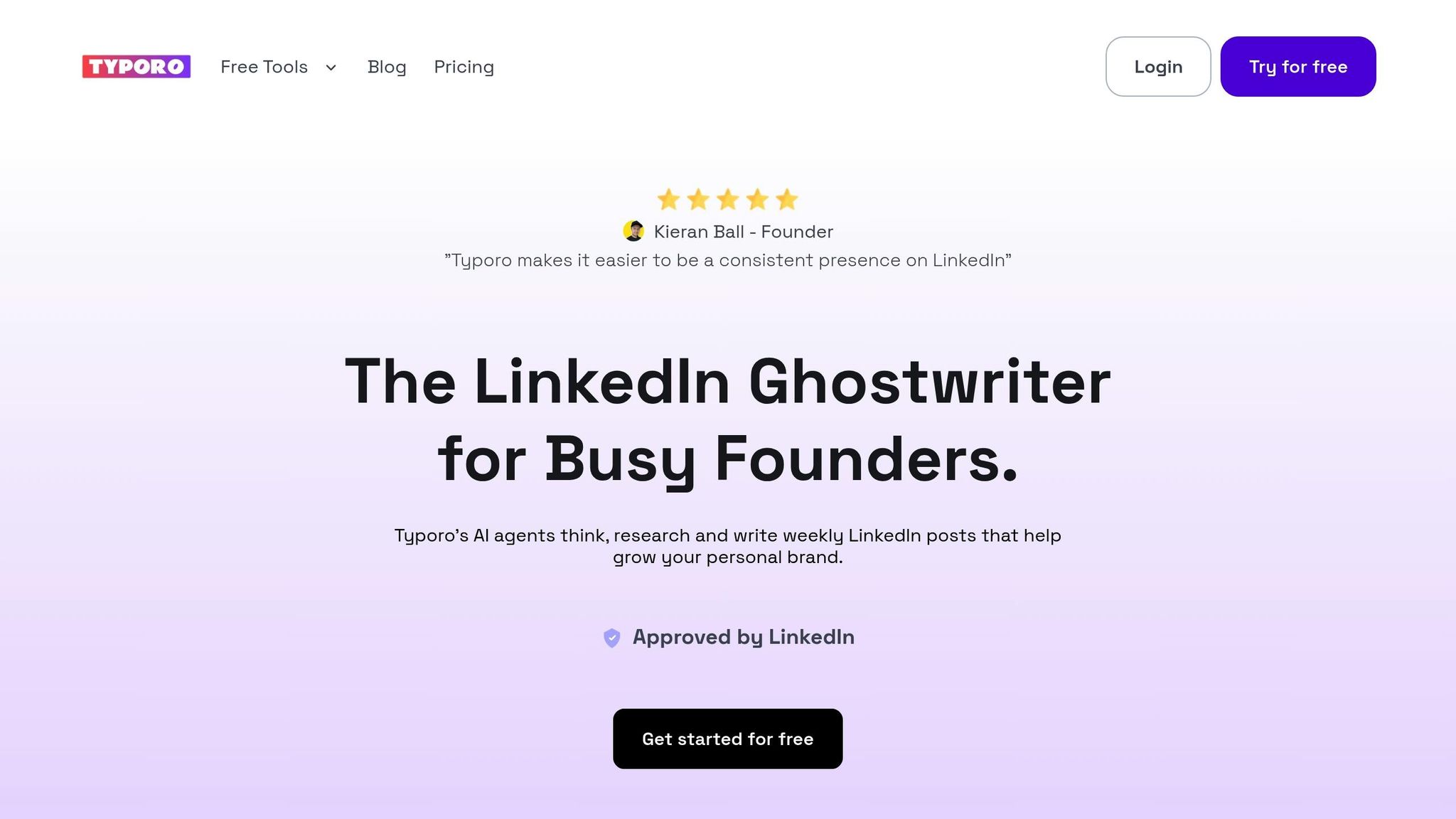
Analytics are only half the equation. Automation tools like Typoro can revolutionize your LinkedIn content creation by using AI to craft, schedule, and optimize posts – all while adapting to your unique voice.
Typoro’s AI post writer eliminates the dreaded blank page, generating content tailored to your industry and audience. You can review and tweak these drafts to ensure they align with your style and messaging.
The platform’s voice and tone learning feature takes things a step further. By analyzing your existing content, Typoro creates posts that feel authentically “you,” maintaining consistency across your LinkedIn presence.
Need to target specific groups? Typoro’s audience-specific content adjusts complexity, terminology, and focus to better connect with your desired audience, whether they’re industry peers, potential clients, or fellow entrepreneurs.
Typoro also goes beyond LinkedIn’s native analytics with performance tracking and engagement optimization. This allows you to see which AI-generated posts perform best and use those insights to refine your strategy over time.
| Plan | Monthly Price | LinkedIn Users | AI Words | Agent Runs | Best For |
|---|---|---|---|---|---|
| Creator | $19 | 1 | 20,000 | 30 | Solo founders building personal brands |
| Growth | $39 | 3 | 70,000 | 100 | Small teams streamlining content creation |
| Scale | $99 | 10 | Unlimited | 1,000 | Growing companies with multiple thought leaders |
Typoro also makes it easy to repurpose and expand content. Successful posts can be transformed into variations for different audiences or expanded into long-form articles, ensuring you get the most mileage out of your best ideas.
Best Practices for Automation and Content Scaling
Automation can amplify your efforts without compromising authenticity. Here are some tips for scaling your content while staying genuine:
- Post strategically, not just consistently. Test different posting times to find when your audience is most active.
- Let AI draft, but always refine. Reviewing and editing AI-generated posts ensures they reflect your expertise and personal touch.
- Diversify your content. Share a mix of industry insights, personal stories, data-driven observations, and engagement questions to keep your audience interested.
- Watch engagement trends. If AI-generated posts don’t perform as well as manual ones, tweak your prompts or add more personal input.
- Simplify your workflow. Use AI to brainstorm ideas, draft posts, and schedule them. Then, focus your energy on real-time interactions with your audience.
- Measure time savings. Automation should free you up for relationship-building and strategic planning while maintaining or improving your engagement levels.
The most impactful leaders use automation to handle repetitive tasks, saving their energy for meaningful interactions – responding to comments, engaging with other thought leaders, and participating in conversations that strengthen professional relationships. By blending smart tools with personal effort, you can scale your presence without losing that human touch.
Sustaining and Scaling Your Thought Leadership
Maintaining thought leadership isn’t a one-time effort – it’s an ongoing process that requires consistent focus and smart adjustments. Influential leaders know that credibility must be earned repeatedly, relationships need constant attention, and strategies should evolve to stay effective. These building blocks pave the way for forging meaningful partnerships with other industry leaders.
Building Credibility with Data-Driven Insights
To establish and sustain credibility, back up your ideas with solid evidence – think data, research, and real-world examples. The most respected thought leaders on LinkedIn don’t just share opinions; they ground their insights in facts.
Incorporating reliable statistics into your posts can make your arguments stronger. Instead of vague statements, use data to highlight trends and support your points. Take it a step further by sharing detailed case studies from your own experiences. For instance, describe a project you led, include specific metrics, and explain how it succeeded within a clear timeline. This approach not only informs but also demonstrates your expertise in action.
Adding insights from respected third-party research can also boost your credibility. By blending external data with your personal perspective, you create content that’s both informative and uniquely yours.
Financial figures are another powerful tool. Share numbers that show the tangible impact of your work, such as increases in revenue, cost reductions, or productivity gains. Specific figures make your content more engaging and trustworthy.
Pay attention to how your audience responds to data-driven posts. Track which ones spark the most engagement – this will help you fine-tune your approach over time.
Collaborating with Industry Leaders
Teaming up with other thought leaders can help you reach wider audiences while bringing fresh ideas to your content. Look for professionals whose expertise complements your own and whose networks align with your goals.
Co-authoring posts is particularly effective on LinkedIn. It combines different viewpoints and connects with multiple audiences at once. For example, collaborating with a leader from a related field can help you create content that resonates with diverse groups.
Interactive formats like LinkedIn Live sessions or collaborative content series encourage real-time engagement. These formats often lead to meaningful conversations and follow-up opportunities, strengthening your professional connections.
Don’t forget to tag your collaborators. It’s a simple way to extend your content’s reach and reinforce those relationships. Hosting small industry discussions or roundtables can also position you as a connector in your field. Highlight the key takeaways from these discussions in LinkedIn articles, giving credit to all contributors.
Consider regular collaborations, like monthly predictions or quarterly trend analyses with a group of experts. Consistent, high-quality content like this can establish you as a central voice in your industry.
Guest appearances on other leaders’ platforms – whether in posts, articles, or newsletters – can also introduce you to new audiences and expand your network. Use performance data to refine your collaborative efforts and keep improving your strategy.
Continuously Optimizing Your LinkedIn Strategy
Once you’ve built credibility and established collaborations, the next step is to keep refining your approach. LinkedIn’s algorithm and audience preferences change frequently, so treat your strategy as a living document that evolves with time.
Track metrics like engagement quality, follower growth, and content reach to guide your adjustments. Go beyond surface-level stats like likes and comments – look at the depth of engagement, such as thoughtful comments or shares, to understand what resonates most.
Experiment with A/B testing to compare different content formats. For example, test carousel posts against single images or long-form articles against shorter updates. You can also analyze whether data-heavy posts perform better than narrative-driven stories. These insights can help you plan your content calendar more effectively.
Align your posts with major industry events. Think about timing your content around conferences, quarterly cycles, or annual planning periods. At the same time, stay flexible enough to comment on breaking industry news when it’s relevant.
As your career progresses, let your voice evolve too. While it’s important to maintain consistency, reflecting your professional growth in your tone can make your content feel more authentic. Tools like Typoro can help you keep your messaging aligned while allowing room for natural evolution.
Pay close attention to when your audience is most active. Look beyond likes – focus on meaningful interactions, such as in-depth comments or shared posts, to gauge deeper engagement.
Be open to exploring LinkedIn’s new features, like polls, newsletters, or live audio events. Early adoption of these tools can help you stand out and increase your visibility.
Rather than simply mirroring what other thought leaders are doing, look for gaps in the content landscape. Sharing your perspective on under-discussed topics can help you stand out and build authority in your niche.
Finally, listen to your network. Comments and discussions can reveal what your audience cares about most. Use this feedback to ensure your content stays relevant and valuable as their needs evolve.
The key to sustaining thought leadership lies in balancing consistency with flexibility – staying true to your core message while embracing opportunities to grow and adapt.
Conclusion: Key Takeaways for LinkedIn Thought Leadership
Establishing yourself as a thought leader on LinkedIn isn’t an overnight achievement – it’s a steady effort that grows over time. The most effective professionals know that genuine engagement and consistently sharing meaningful content are the cornerstones of building lasting influence.
Think of your LinkedIn profile as your digital storefront. A strong headline, a well-detailed experience section, and a professional photo are essential for establishing credibility and making a positive first impression.
When it comes to content, consistency outweighs perfection. Regularly sharing insights – whether personal experiences, data-backed findings, or actionable tips – helps you grow your audience faster than sporadic, overly polished posts. The key is to provide value that your network can use right away.
The best LinkedIn leaders strike a balance between creating content and engaging with others through thoughtful comments. This dual approach not only strengthens relationships but also boosts your visibility organically, thanks to LinkedIn’s algorithm. Using tools like Typoro can streamline content creation while preserving your personal tone, making it easier to maintain consistency without losing authenticity.
Pay attention to performance metrics, but focus on those that truly matter. Comments that lead to meaningful conversations, shares from respected peers, and direct messages from potential collaborators are far more telling of your influence than simple likes or reactions.
Patience and persistence are essential. LinkedIn thought leadership is about building trust and delivering consistent value, not just broadcasting content. Over time, the trust you earn from your network becomes one of your most powerful professional assets.
Start today – every influential voice on LinkedIn began with a single valuable post.
FAQs
How can I build and showcase my personal brand on LinkedIn to become a thought leader?
To establish and grow your personal brand as a thought leader on LinkedIn, start by pinpointing your niche. Focus on the sweet spot where your expertise aligns with what your audience cares about most.
Polish your LinkedIn profile by crafting a headline that’s clear and packed with relevant keywords. Pair it with a professional summary that showcases your experience and highlights your authority in the field.
Consistently share meaningful, engaging content – think personal stories, lessons you’ve learned, or practical tips that your audience can apply. Stay active by participating in discussions, offering thoughtful comments, and building genuine connections. Thought leadership isn’t just about sharing knowledge; it’s about creating value and forming real relationships over time.
How can I create LinkedIn content that engages my audience and helps grow my professional network?
Creating LinkedIn content that connects with your audience and builds your network starts with a clear focus. Begin by defining your niche – the specific area where your expertise shines – and stick to topics that showcase your knowledge. Share content that offers real value, whether it’s practical tips, thoughtful insights, or relatable personal stories.
Consistency is crucial. Stick to a regular posting schedule and make your content stand out with attention-grabbing hooks that encourage people to read more. Build relationships by engaging with your audience – reply to comments, spark conversations through direct messages, and join discussions on topics that matter to your network.
Don’t forget to track how your posts are performing. Regularly review the data to see what clicks with your audience and adjust your strategy accordingly. Above all, stay genuine and consistent – those are the ingredients for lasting connections on LinkedIn.
How can I use LinkedIn analytics and AI tools like Typoro to enhance my thought leadership strategy?
To fine-tune your thought leadership strategy on LinkedIn, combining LinkedIn analytics with AI tools like Typoro can make a big difference in how you connect with your audience. LinkedIn analytics allows you to monitor crucial metrics, such as post engagement, audience demographics, and profile views. These insights reveal what content your audience finds most engaging, helping you adjust your approach to better meet their interests.
On the other hand, AI tools like Typoro can simplify the content creation process by providing features like content suggestions, editing support, and performance tracking. These tools not only save time but also help you craft professional, goal-oriented messaging. When you pair these data-driven insights with AI-enhanced content creation, you’ll be better equipped to establish yourself as a reliable and influential voice in your field.
Related Blog Posts

 Kieran Ball - Founder
"Typoro makes it easier to be a consistent presence on LinkedIn"
The LinkedIn Ghostwriter for Busy Founders.
Typoro’s AI agents think, research and write weekly LinkedIn posts that help grow your personal brand.
