Personal Branding Checklist for Busy Founders

Your personal brand is your startup’s first impression. In today’s digital landscape, investors, partners, and clients often research founders online before making decisions. If your online presence doesn’t stand out, you risk being overlooked. The good news? Building an impactful personal brand doesn’t require endless hours. Here’s what you need to know:
- Why it matters: 93% of consumers believe a CEO’s social media reflects company values, and 76% of executives say it boosts credibility.
- Key steps: Define your mission, know your audience, craft a strong LinkedIn profile, and share meaningful content consistently.
- Tools to simplify: AI platforms like Typoro can help automate and streamline content creation for as little as $19/month.
Start small. Update your LinkedIn headline, post weekly insights, and monitor your progress. With focused effort, your personal brand can drive funding, partnerships, and trust.
Full personal branding system for B2B founders explained in 21 minutes
Step 1: Build Your Personal Brand Foundation
Before diving into LinkedIn posts, it’s crucial to establish the core elements of your personal brand. Without a strong foundation, your efforts can easily lose direction.
Define Your Mission and Values
Think of your mission and values as your personal GPS – they guide what you post, the opportunities you pursue, and how you handle challenges.
Ask yourself: What do I want to be known for in my industry? For example, a founder focused on "empowering borderless entrepreneurship" might embrace values like trust and opportunity. This clarity helps you stay focused and ensures your audience understands what you stand for.
A practical tip: Take 30 minutes to write down three core values and a clear mission statement. If you’re in fintech, you might craft something like, "Democratizing financial access for underserved communities", paired with values such as transparency, inclusion, and innovation.
This exercise isn’t just theoretical – it becomes a decision-making tool. Whether you’re deciding to partner with a company or accept a speaking gig, your mission and values act as a filter to keep your branding consistent. Once you’ve nailed these down, the next step is figuring out who your message is for.
Know Your Target Audience
Trying to appeal to everyone often means you connect with no one. In fact, 86% of people say authenticity is essential in brands. Your message will resonate more if it’s tailored to specific groups rather than being overly broad.
Your audience likely includes potential investors, customers, and industry peers. Each group has unique expectations: investors want to see your market knowledge and execution skills, customers need to trust your expertise, and peers look for thought leadership and collaboration opportunities.
To better understand your audience:
- Use LinkedIn analytics to see who’s engaging with your content.
- Check out competitor profiles to learn how other founders connect with their audience.
- Have casual conversations with people from your target groups to uncover their challenges and the content they find valuable.
Pro tip: Create simple personas for your audience. For example, "Sarah the Series A investor" might value data-driven insights, while "Mike the potential enterprise client" might prefer actionable advice. Before posting, ask yourself if your message would resonate with these personas.
Write Your Personal Brand Statement
Your personal brand statement is like your professional tagline – a short, impactful summary of your expertise, values, and the impact you create. It’s what people should remember about you after a quick introduction.
Take inspiration from industry leaders. Gary Vaynerchuk’s statement says:
Gary is an entrepreneur at heart – he builds businesses. Today, he helps Fortune 1000 brands leverage consumer attention through his full-service advertising agency, VaynerMedia.
Mari Smith’s statement reads:
I help businesses and brands to get high integrity, profitable exposure online. My methodology demystifies social media marketing, and emphasizes how relationship building is always at the heart of successful business.
Notice the structure: they define their audience, highlight the value they provide, and showcase their unique approach.
Try this template: "I help [target audience] achieve [specific result] by [your unique approach]." For instance, "I help SaaS startups scale by providing growth strategies rooted in data-driven insights."
Keep it conversational and avoid jargon. Say it out loud – if it feels natural and memorable, you’re on the right track. If it doesn’t, tweak it until it flows effortlessly.
Step 2: Set Up Your LinkedIn Profile
Your LinkedIn profile serves as a 24/7 pitch to attract leads, investors, and partners. Considering that LinkedIn generates 80% of all B2B social media leads, it’s crucial for busy founders to make their profiles as impactful as possible. Focusing on your personal profile, rather than a company page, tends to result in better engagement. The next step? Fine-tune your profile to unlock LinkedIn’s full potential.
Optimize Your Profile Features
Use LinkedIn’s built-in tools to showcase your expertise and accomplishments. A well-crafted profile not only boosts credibility but also turns casual interest into genuine opportunities.
sbb-itb-1b818d9
Step 3: Create and Share Content
Building a strong presence as a founder often comes down to one thing: creating and sharing content that matters. Consistent, meaningful content builds trust and helps position you as a leader in your industry. The tricky part? Balancing content creation with the demands of running a business.
Use AI Tools to Simplify Content Creation
For busy founders, finding time for content can feel impossible. This is where tools like Typoro’s AI-powered platform come in handy. It automates tasks like generating posts, scheduling, and even optimizing your LinkedIn content. In just minutes, you can prepare weeks’ worth of posts.
Typoro adapts to your personal voice and tone, so the content it generates feels like it’s coming directly from you. Features like audience-specific content suggestions and performance tracking make it easy to stay consistent. Starting at $19/month, the Creator plan offers 20,000 AI-generated words, 30 Agent Runs, and unlimited scheduling – perfect for solopreneurs looking to grow their personal brand.
A great strategy for time management is batching your content creation. Dedicate 30 minutes every Sunday to draft and schedule your posts for the week. This method ensures you stay consistent while freeing up your weekdays for more pressing business tasks. By using tools and a structured approach, you can focus on sharing insights that resonate with your audience.
Share Content That Helps Your Audience
The best content solves problems your audience faces. Insights into your industry, lessons from failures, and actionable advice are especially engaging for entrepreneurs and potential clients. Keep promotional posts to a minimum – no more than 20% of your overall content.
Focus on topics that highlight your expertise while offering value to your audience. Share behind-the-scenes moments from your journey, discuss trends with your take on them, or break down complex ideas into simple, actionable points. Personal stories, especially those about overcoming challenges, tend to strike a chord because they’re relatable and real.
When picking topics, think about your audience’s struggles. For example, if you’re in fintech, talk about navigating regulatory updates, securing funding, or tackling customer acquisition. B2B founders might explore areas like improving operational efficiency, building strong teams, or expanding into new markets – practical advice that other business leaders can use right away.
Build Engagement With Your Network
Once your content is live, the next step is to spark engagement and extend its reach. Start by interacting with your audience – respond to every comment on your posts, especially within the first few hours. This signals LinkedIn’s algorithm that your content is worth promoting to a broader audience.
But don’t stop there. Engage with others’ posts, too. Spend 10–15 minutes each day leaving thoughtful comments on posts from peers, potential clients, and industry leaders. Skip generic responses like "Great post!" Instead, offer your insights or ask meaningful questions to keep the conversation going.
LinkedIn favors content that drives discussions, so try ending your posts with a question to encourage responses. Always reply to comments to create a dialogue. This not only increases your post’s visibility but also helps you form genuine connections with your network. Remember, personal branding is about consistent, valuable interactions – not just broadcasting your thoughts.
To stay efficient, set specific times for engagement instead of checking LinkedIn throughout the day. Morning or lunch breaks are usually ideal, giving you time to stay active without disrupting your deeper work sessions.
Step 4: Track and Improve Your Results
Building a personal brand isn’t a one-and-done process – it requires consistent monitoring and adjustments based on data. By keeping an eye on your performance, you can figure out what’s working and tweak what’s not.
Monitor LinkedIn Metrics
LinkedIn’s built-in analytics offer a treasure trove of information about how your content performs and how your audience interacts with your brand. Keep an eye on key metrics like post impressions, profile views, connection growth, and engagement rate. These numbers can help you identify trends and understand which topics spark conversations.
For instance, an increase in profile views usually means your content is grabbing attention and drawing people in. On the flip side, a drop might mean it’s time to rework your strategy – maybe your content needs a refresh, or your posting schedule could use some tweaking. Your engagement rate (calculated as total engagements divided by follower count) is another critical indicator. If interaction levels are lower than expected, it might be a signal to revisit your content themes or experiment with different formats.
These metrics give you a clear roadmap for making smarter decisions moving forward.
Use Typoro‘s Performance Tracking Tools
To go beyond LinkedIn’s basic analytics, consider using Typoro’s advanced performance tracking tools. Typoro allows you to dive deeper into audience trends and content performance. With its features, you can analyze engagement patterns over time, helping you fine-tune your messaging and optimize your posting schedule for maximum impact.
Adjust Your Approach Based on Data
Make it a habit to review your analytics every month. Look for patterns – what’s working, and what’s falling flat? Use this data to drop underperforming content and focus on the topics that resonate most with your audience.
Don’t just rely on numbers, though. Pay attention to qualitative feedback, like audience comments. These can offer valuable insights into what your followers care about. If you notice recurring themes in their feedback, consider addressing those ideas in your future posts to keep your content relevant and engaging.
Conclusion: Build Your Brand with Clear Goals
Creating a strong personal brand doesn’t have to take over your schedule. By following a straightforward checklist – defining your foundation, optimizing your LinkedIn profile, producing consistent content, and tracking your progress – you can develop a presence that leads to tangible business results.
Think of personal branding as a business initiative with clear, measurable objectives. When done right, your brand becomes a key driver for partnerships, attracts top talent, and positions you as a leader in your field.
Start small. Update your LinkedIn headline or plan a few posts. These small, consistent efforts can lead to a big impact over time.
Remember, audiences value authenticity more than perfection. Share real insights, lessons you’ve learned, and even challenges you’re working through. This kind of honesty resonates with people looking for relatable and actionable advice.
Using tools like Typoro, as mentioned earlier, can simplify the process. Typoro helps you create and schedule AI-powered posts while tracking performance, freeing up time to focus on growing your business. It’s a practical way to ensure your personal branding efforts align with your entrepreneurial goals.
Your personal brand is one of your most powerful business assets. Start today, and see how it can transform not only your online presence but also the trajectory of your business.
FAQs
How can busy founders build their personal brand without sacrificing time for their business?
Founders juggling busy schedules can simplify personal branding by zeroing in on platforms where their audience spends the most time – think LinkedIn or Twitter. The key? Consistency. Dedicate a short, focused time block each day to post updates, share insights, and engage with comments.
To save time, consider using AI-powered tools for creating posts or drafting articles. Focus your energy on impactful activities, like leaving thoughtful comments and sharing insightful content, to establish credibility and build connections. With a steady, intentional approach, founders can grow their personal brand without pulling focus from their business.
How can I optimize my LinkedIn profile to attract investors and business partners?
To make your LinkedIn profile truly shine, start by clearly outlining your mission, values, and the audience you want to reach. Your headline and summary should showcase your expertise while reflecting your professional aspirations and personal brand.
Keep your tone professional but approachable. Use a high-quality profile photo and pair it with a banner image that visually supports your brand or industry. Throughout your profile, highlight your key achievements, skills, and experiences, focusing on results that can be quantified to add credibility.
Stay active on the platform by sharing your thoughts on industry trends, offering insights, and reflecting on lessons learned. Engage with your network by commenting thoughtfully on their posts and starting meaningful discussions. The secret to success? Consistency. Post valuable content regularly and connect with professionals who align with your goals to steadily build your network.
How can Typoro’s AI tools help me create consistent, high-quality content for my personal brand?
Typoro’s AI tools make content creation a breeze by helping you craft professional and engaging material in no time. Whether you’re working on LinkedIn posts, articles, or social media updates, these tools ensure your tone and messaging reflect your personal brand perfectly.
With features like smart content suggestions and advanced editing capabilities, Typoro not only saves you time but also keeps your voice polished and consistent. This means you can concentrate on building your reputation as a thought leader and engaging with your audience, even when your schedule is packed.
Related Blog Posts

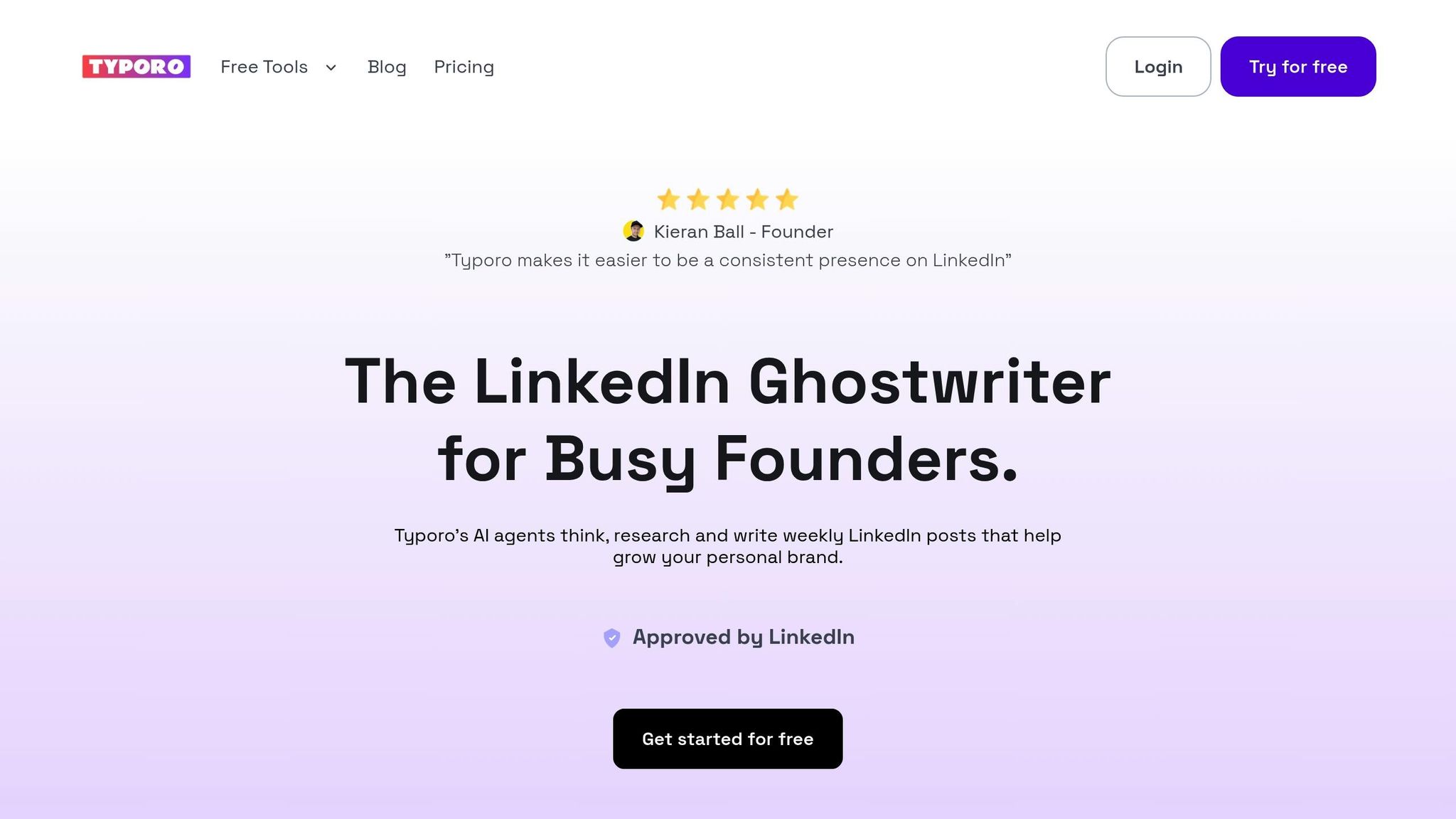
 Kieran Ball - Founder
"Typoro makes it easier to be a consistent presence on LinkedIn"
The LinkedIn Ghostwriter for Busy Founders.
Typoro’s AI agents think, research and write weekly LinkedIn posts that help grow your personal brand.
